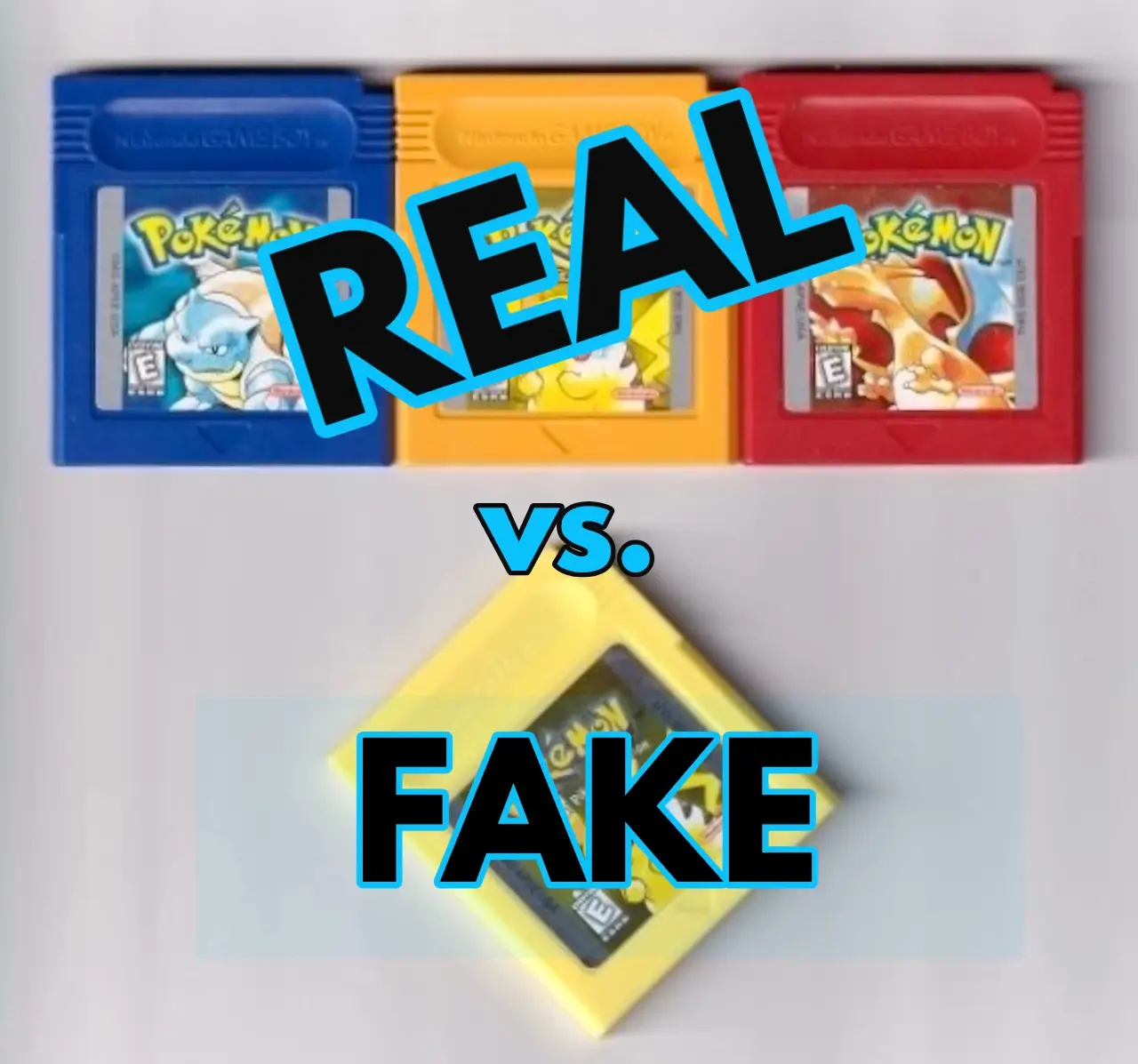
Real vs fake Pokemon game examples.

This page gives examples of common reproduction/fake games.

Unsure if your games are real or fake?These images already show real next to fake, but feel free to reach out with questions!
Email Photos

Game Boy Color: Real vs Fake Overview

A quick visual overview showing authentic cartridge presentation compared with an obvious fake.

Real vs fakeReal vs fake Pokemon Game Boy cartridges
Game Boy-era comparison

Fast first-pass signs

This kind of photo helps sellers understand that shell color, label placement, print quality, and overall presentation matter.

  • Real cartridges should match the expected shell color family.
  • Labels should fit the recessed area cleanly.
  • Fake examples often look too glossy, crooked, blurry, or strangely colored.
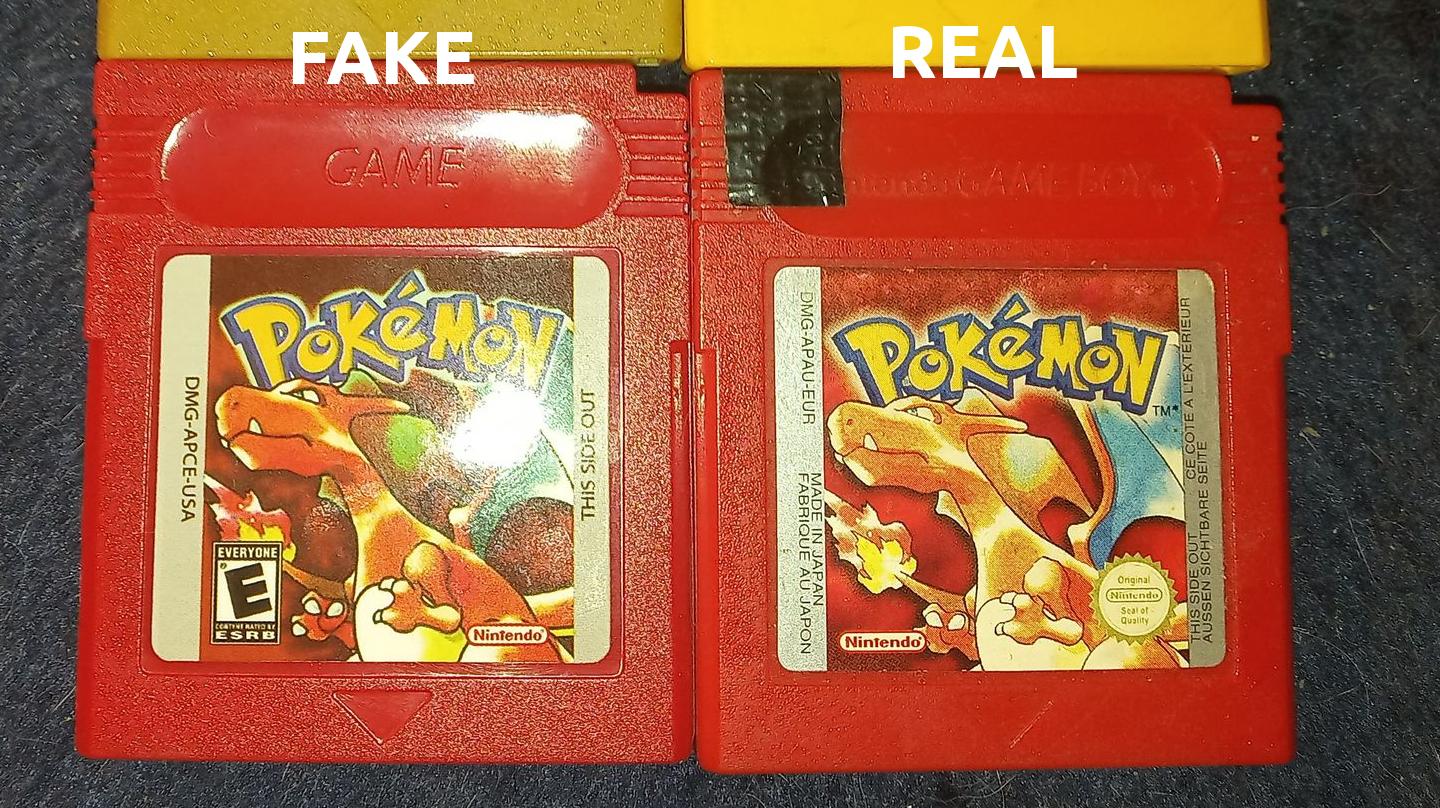
Pokemon Red: Front Label and Shell

This image clearly shows a fake beside a real cartridge, including label layout and shell differences.

Front comparisonPokemon Red fake vs real front cartridge comparison
Pokemon Red front comparison Check label size, print quality, shell text, and overall fit.

What to inspect

The front label is usually the fastest way to flag a suspicious cartridge before asking for more photos.

  • Fake side shows different label proportions and glare/finish.
  • Real side shows cleaner label placement and expected shell details.
  • Ask for a straight-on photo so text, seal, and art are not distorted.

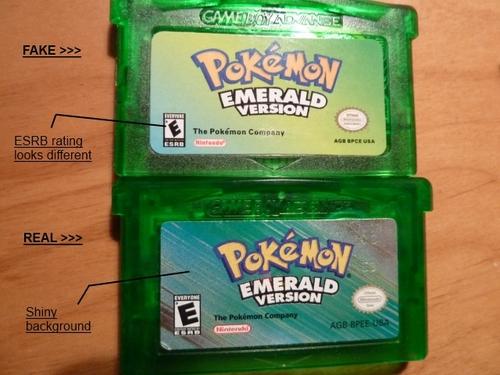
Pokemon Emerald: Label Shine and ESRB Details

Emerald is a great example because the label finish and background effect are a major visual cue.

Emerald labelPokemon Emerald fake vs real label comparison
Pokemon Emerald comparison Look at background shine, rating icon, and label print.

What to inspect

This example explains why close-up label photos matter, especially on GBA Pokemon games.

  • Real labels can have a different reflective/background effect.
  • ESRB/rating icons and print weight can look off on fakes.
  • Shell transparency and label quality should both be reviewed together.

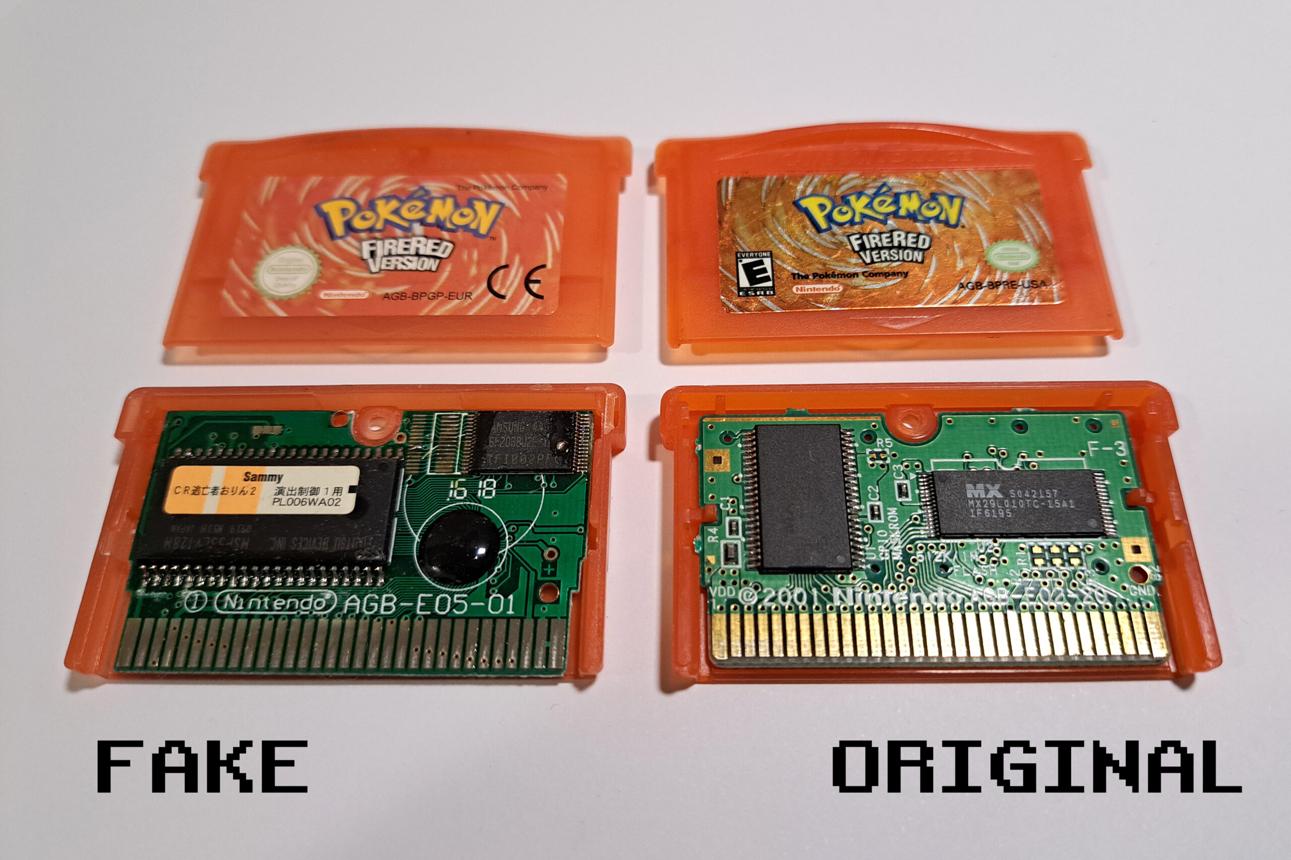
Pokemon FireRed: Board and Internal Check

If a game is already open, the board photo can be one of the strongest authenticity checks.

Internal boardPokemon FireRed fake vs original board comparison
Pokemon FireRed board comparison

What to inspect

The inside of the cartridge can reveal obvious board layout differences that are not visible from the label alone.

  • Compare board layout, chips, contacts, and printed board markings.
  • Fake boards may look generic, sparse, or oddly arranged.
  • Battery and chip placement can matter depending on the title.

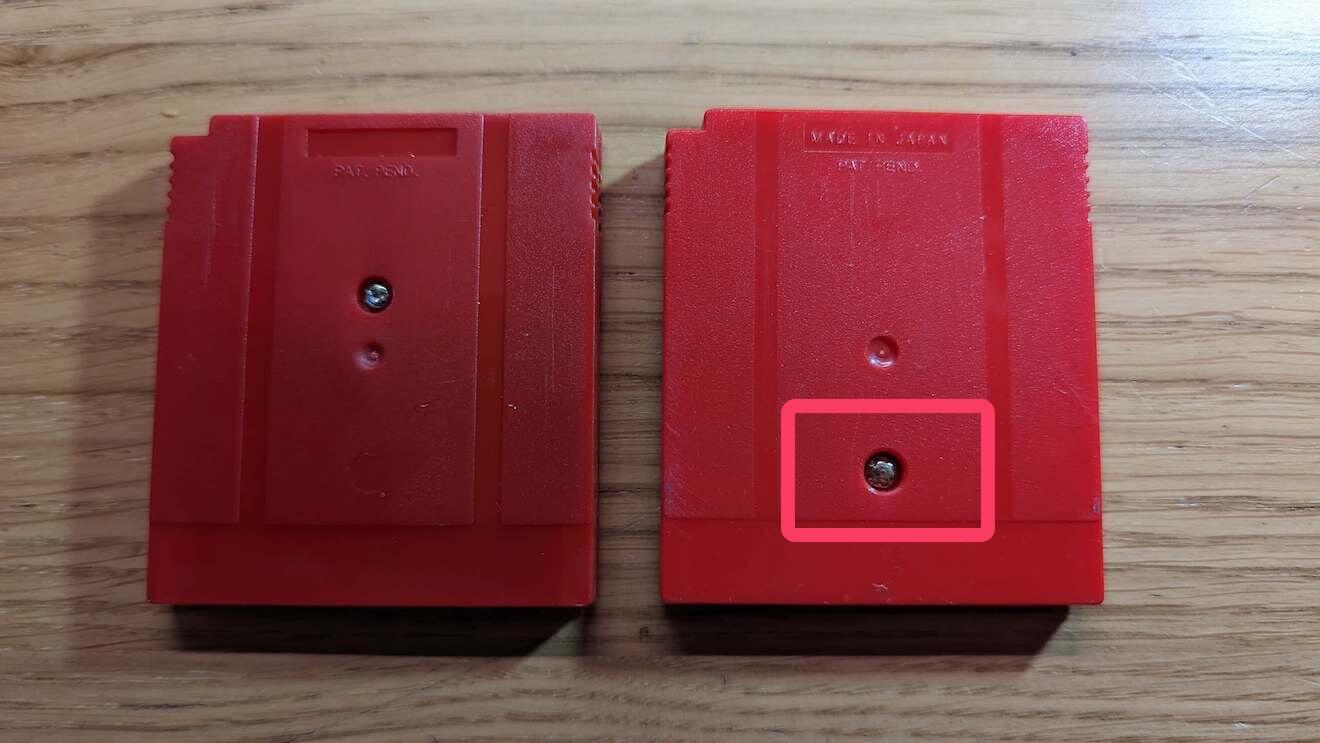
Back Shell and Screw Check

The back side matters because many sellers only photograph the front, and many fakes show issues on the back.

Back comparisonPokemon cartridge back screw comparison
Back shell comparison Screw type, molded text, and shell detail can reveal problems.

What to inspect

Fakes often use regular Phillips screws instead of the star screw. It's the easiest way to identify a fake.

  • Check screw style and placement.
  • Look at molded text and shell texture.
  • Compare the back shell to the expected cartridge family.

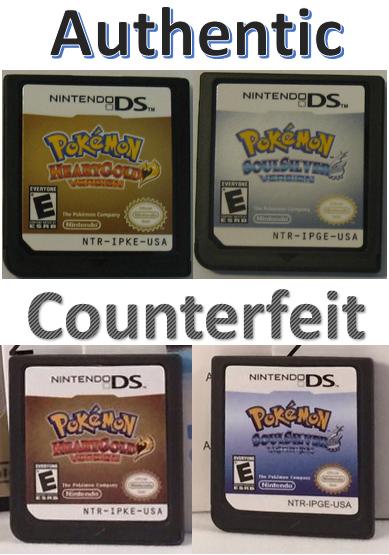
Pokemon DS: Authentic vs Counterfeit

DS games can be subtler than Game Boy cartridges, so front label, shell shape, and code details matter.

DS comparisonAuthentic vs counterfeit Pokemon DS cartridge comparison
Pokemon DS cartridge comparison Ask for close-up front and back photos for DS games.

What to inspect

This gives sellers a simple visual reason to send better DS photos instead of one blurry front picture.

  • Check label spacing, printed codes, and Nintendo DS logo area.
  • Look for suspicious shell shape, shallow details, or wrong plastic tone.
  • Back photos may be needed for final review.
Already submitting bulk cards?

Mention Pokemon games, handhelds, cases, or manuals in your submission notes. If photos are not ready yet, reply to the confirmation email with pictures before shipping.

Start a Video Game Submission